[5th of a series of posts about my late October travels to southern Germany]
“You are not responsible for what happened. But you certainly are responsible for preventing it from happening again.”
—Max Mannheim, Jewish concentration camp survivor (b. February 6, 1920 – d. September 23, 2016)
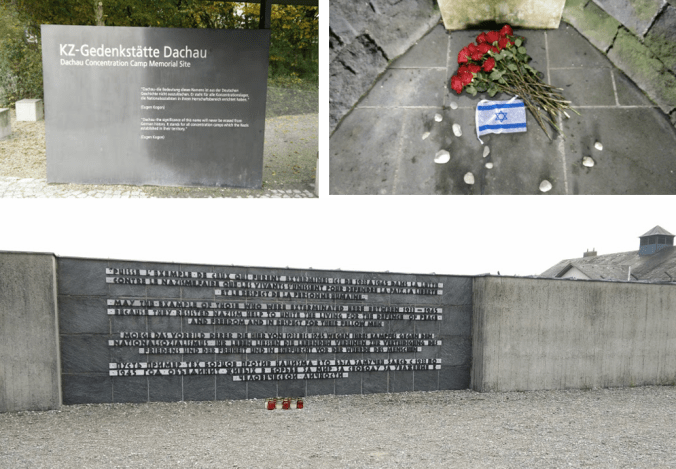
Dachau Concentration Camp was the first of its kind to be built for its purpose and was used as a model for other Nazi-era camps. As the oldest such facility, operational from 1933-1945, Dachau was originally opened for political prisoners, but later evolved into primarily holding Jewish people, who were subjected to gross overcrowding, medical experimentation, and torture. It also continued to imprison political prisoners, non-Jewish Nazi protesters, and groups that the Nazi Party considered as “inferior peoples,” e.g., Jehovah’s Witnesses, gypsies, physically or mentally disabled people, homosexuals.
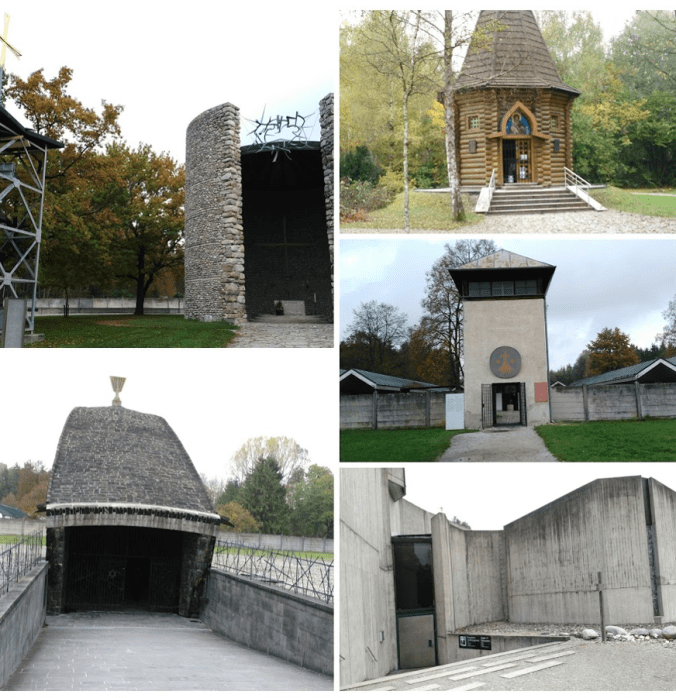
Similar to the Documentation Centre in Nuremberg, this infamous site has been slowly transformed over time with historical buildings that document what happened here and exhibitions. Some exhibits show what life was like at the camp during its active years, the timeline of the Nazi regime and the people behind it, and stories of some of the prisoners and survivors. In memoriam to all the different groups that were detained at the camp, religious memorials representing such populace have been erected on the grounds and are open for all to ponder the atrocious crimes to humanity that happened here.

 Karina Pinella
Pingback: Dachau Concentration Camp: Model of Inhumanity — Karina Pinella – The Punk Rock Hobo
Reblogged this on Fill-teer N Coffee – AMERICA'S JUDICIAL JUDGES ARE THE ANTI-CHRIST…. DANIEL 7:26.
LikeLiked by 1 person
Thanks
LikeLike
It should have been quite hard to visit … But there is so much History there, things that Makind needs to remember always. For the victims and for our future generations too. 💙💛💙
LikeLiked by 1 person
Never forget
LikeLike
Such an interesting travel. Great post! You have excellent ‘up’ energy after such an extensive travel. Amazing!
LikeLiked by 1 person
I enjoy traveling and to maintain a feeling of high, writing about it helped me go down back to “reality.”
LikeLiked by 1 person
Thanks for sharing.
I could never enjoy such a place, for it brings back visuals from history and events witnessed fairly close, even if it was across a border.
LikeLiked by 1 person
It is a learning experience and a part of history that should be remembered, painful as it is
LikeLike
Wow. You really had a full vacation! I enjoyed all your photos and history of the places you visited.
LikeLiked by 1 person
Thanks!
LikeLiked by 1 person
I’ve watched a few documentaries on History channel (and NatGeo?) about this. Amazing you got to see it for real.
LikeLiked by 2 people
It was quite an experience. Just astounding
LikeLiked by 2 people